Showing posts with label BECMI. Show all posts

Friday, September 7, 2018

First Level Spell Features - Compiled

An older post of mine seems to be getting some traffic, so I went ahead and compiled my First Level Spell Features into a single PDF document.

Embedded below:


Friday, January 30, 2015

Spell Features.

The intention is to provide a little more "Magic" to First Level Magic-Users, including up to six unusual choices for most of the standard starting spells. This should help insure that no two 1st Level Magic-Users are the same, even if they possess the same spells. It might also make the Class a little more flavorful and “exotic” for those that grouse at the limitations of low level Magic-Users or sour at the idea of Random Spell Selection when they receive perceived non-starters like the much maligned “Ventriloquism.”

I'm deeply indebted to Courtney's excellent series on Spell Memorization Effects, which I'm sure was brewing in the back of my brain when I vomited this up. It really got me thinking about Prepared Spells as a resource that does something passively until exhausted.

The idea also came to me as I was revising my Tunnels & Trolls Spell Book handouts, so please excuse the level of whimsy and tongue-in-cheek that seems to have crept into some of these. Re-skin or un-pun to taste. I think this is balanced by the ones that get quite dark in places.

I imagine that it would work something like this: Once Spells are randomly determined (or selected, if you are feeling exceptionally generous) for a first level Magic-User the player may either choose or randomly roll on the Spell Features for their specific 1st level Spell (everyone receives Read Magic in most of my games). 

Some Spell Features are obviously more useful than others, and no regard has been paid to imaginary beasts like game-balance, nor is there much in the way of mechanical consistency. This was intentional, as I find it keeps things weird and mystifying, just as magic should be.

I've tried to incorporate interesting draw backs and resource management (usually based on time, which is precious) wherever possible so that these don't just turn into more character sheet cruft. I'm interested to hear what anyone thinks.

Some definitions of terms and explanations:

HLSS: This stands for Highest Level Spell Slot. I use this periodically to provide a somewhat tighter bounded bonus than Caster Level. In BECMI, this number is never higher than nine, and it doesn't increase every level, only according to the Spell Progression table. It's also information that is fairly obvious and at-hand (most casters know the level of the highest Spell they can prepare and cast). As a controlled bonus or duration, I tend to prefer it to caster level.

BECMI Example: A 5th Level Magic-User's HLSS is 3, while a 17th Level Magic-User has an HLSS of 7.

Familiars: However you do this is fine. I typically charge the Magic-User either 30 gold pieces from their starting wealth, or if using my Quick Equipment and Encumbrance Sheet, a familiar can be had for 1 miscellaneous pick. You could also just have them pick a die to drop from their starting wealth roll (making a Familiar cost between 10 and 60 gold pieces, Magic-Users don't have expenses like Armor, so they often end up wealthier than the rest of the party, the result can also serve as the Familiar's hit points). I tend to keep Familiars mostly cosmetic, unless one of the Familiar Features associated with the Magic-User's starting spell is selected.

Expend/Release/Internalize: Some features use this terminology (I obviously haven't found a favorite yet). This is not necessarily “casting the spell” in most cases, so I don't imagine it would take any time (or need to take place on the Caster's turn even, as some of the effects are triggered in reaction to other actions), but it does erase the spell from the Caster's mind the same way. I don't imagine it really having any outward visible effects, and it'd probably be possible to do in an Anti-Magic field. Just another choice to present the player with in most cases.

I've given a little bit of thought to converting this to D&D 5e, but I'm not as intimately familiar with the new Spell List yet. In most places where Bonus or Penalty is implied, Advantage/Disadvantage could probably be used. The Slot-Point mechanics of 5e make things a little trickier when it comes to Expending, and the lack of Reaction Rolls as a central mechanic is terribly sad, but I think for the most part the more Iconic Spells (like Charm Person, Sleep, Magic Missile) are similar enough that this could be used with most versions of D&D.

I'll be splitting this into smaller groups to keep the posts short. If there's significant interest, I might assemble a PDF or create a handout/compilation.

Here's a summary of the Spell Features for quick reference/random rolling:

First Level Spells

    1. Avaricious Eyes
    2. Spell Book Feature: Palimpsest of Common Command Words
    3. Know Lineage
    4. Dagger Feature: Haruspex
    5. Tea Leaves
    6. Familiar Feature: The Eyes Have It
    1. A Loyal Henchman
    2. Spell Book Feature: Hamlin's Concerto
    3. Spell Book Feature: Etiquette Book
    4. Perfume
    5. Language: Harpy/Dryad
    6. Familiar Feature: Serpent
    1. Feather Fall Charm
    2. Dagger Feature: Flying
    3. Language: Air Elemental
    4. Gainful Portaging
    5. Spell Book Feature: Buoyant
    6. Familiar Feature: Light as Feather
    1. Tattle-Tale Lock
    2. Spell Book Feature: For Your Eyes Only/Privacy Please
    3. Jar of Friendly Earseekers
    4. Language: Mimic
    5. Puzzle Box
    6. Familiar Feature: Passdoor
    1. Selfish Spells
    2. Dagger Feature: Focus
    3. Spell Book Feature: Made In The Dark
    4. Candle Molds
    5. Language Of Shadows
    6. Familiar Feature: Bat
    1. Strix Missile
    2. Spell Book Feature: Tablet of Arrow Carving
    3. Puissant Technique
    4. Voodoo Doll/Poppet Magic
    5. Dagger Feature: Sympathetic Athame
    6. Patient Missile
    1. Circles
    2. Spell Book Feature: Warded Against Intrusion
    3. Witch Bottle
    4. Dagger Feature: Lodestone
    5. Familiar Feature: Dog
    6. Horseshoes
    1. Staff Feature: Cipherstick
    2. Dictating Quill
    3. Bonus Language
    4. Spell Book Feature: Talking Book
    5. Jar of Tongues
    6. Voracious Reader
    1. Detect Magic/Scroll Ink
    1. Heraldic Gift
    2. Shield-Bearer Training
    3. Dagger Feature: Spell-Warded Kris
    4. Elemental Ward
    5. Spell Book Feature: Defending
    6. Familiar: Turtle
    1. Spell Book Feature: Manual Of Oneiromancy
    2. Pouch Of Apple Seeds
    3. Spell Book Feature: Bedtime Stories
    4. Cockerel Automaton
    5. Osculations
    6. Familiar Feature: Sloth
    1. Music Box
    2. Dagger Feature: Voice Drinker
    3. Dummy Golem
    4. Jar Of Lips
    5. Spell Book Feature: Talking
    6. Familiar Feature: Talks

Spell Features: Sleep and Ventriloquism

See this post for explanations and more information.

Sleep

1. Spell Book Feature: Manual of Oneiromancy – Place your spell book under your pillow and cast Sleep on yourself (normal duration applies). If you sleep undisturbed for at least 1d6 hours, you can choose one of the following: Commune Spell (3 weal/woe questions), See within/behind a portal/container you've touched in the last 24 hours, or wake refreshed with no need to eat or drink for the day. Anyone sleeping within 50 feet of you when you attempt this has terrible nightmares, and cannot be woken until you wake.

2. Pouch of Apple Seeds – You have a pouch of magical apple seeds (2d6). They can be planted in fertile soil and if you cast this spell and water your handiwork, an Apple Tree will grow to sapling size in the standard Sleep Spell duration (4-16 turns). Once grown to this size, it will bear 1 ripe fruit, in a matter of seconds. Anyone eating this apple will fall asleep for 4-16 days on an unsuccessful save. The magic in the apple lasts for 1d6 days, and maintains it's potency if used as an ingredient in an apple-based dish.
Franz JĂ¼ttner (1865–1925): Illustration from Sneewittchen, Scholz' KĂ¼nstler-BilderbĂ¼cher, Mainz 1905

3. Spell Book Feature: Bedtime Stories – If you spend at least 1d6 turns reading out bedtime stories scrawled in your spell book and expend this spell, anyone who is listening falls asleep and has pleasant dreams and a restful slumber (those so affected only need half as much sleep to obtain maximum benefits). It affects the double the standard Sleep Spell HD (targets as determined by the DM, randomly, and at discretion could include you, so make sure the party member on watch stuffs their ears with wax or cotton). The audience doesn't necessarily have to be “willing,” just listening to your stories. If any of the sleepers are wounded or hurt before they fall asleep, the sleeper with the highest hit points loses 1d6 x your HLSS in Hit Points, which in turn heal the hurt sleeper by twice this amount. Anyone reduced to 0 in this fashion never wakes up. They don't die, they just never wake up.

4. Cockerel Automaton – You possess a life-size mechanical rooster. It's gears can be adjusted and wound to have it crow loudly (which triggers a wandering monster check) in metallic tones at a specified time, waking anyone asleep within 500 feet. It only eats your dreams (you won't remember them in the morning if its set to crow, but who needs dreams right?). If you expend this spell, it can be wound to animate, after which it is mobile (clinking as it pointedly pecks at detritus and inquisitively following the person with the most visible metal around), and can attack as a creature with HD equal to your HLSS when cornered (this type of winding animates the rooster for the standard Sleep duration in turns, and can be combined with the Alarm feature above).
Image courteous of lollollol2 DeviantArt page here.

5. Osculations – As long as you have this spell prepared, your kiss can wake anyone sleeping and they are generally well disposed to this intrusion (+2 to reaction rolls, my prince). You can also kiss someone asleep (expending the spell) and they will slumber restfully (regaining 1d6 hit points, plus your HLSS) for the max duration of the spell (16 turns, must sleep all 16 to gain the benefit).

6. Familiar Feature: Sloth – Your familiar is generally asleep most of the time, but it does rouse whenever you sleep to lovingly rid your body of parasites and groom you, cleaning and freshening your appearance. You always wake up with nary a hair out of place (+2 to reaction rolls in situations where an impeccable appearance might benefit you). It will also defend a sleeping master as if it were 1 HD greater than normal (step up damage dice too), but it does so as silently as possible (it would hate to wake you and interrupt your beauty sleep).


Ventriloquism

This spell is generally considered a big ol' rip off, so hopefully these at least make it interesting :)

1. Music Box – You possess an intricately crafted music box with a switch that can be set in the presence of any music. It will then be able to reproduce the tune faithfully with it's limited palette of tiny mallets and electrum striking surfaces. It can hold up to your HLSS in songs. It can record such interesting songs as that of the Harpy Croon or Siren Serenade, so be careful with this.

2. Dagger Feature: Voice Drinker – If you wound someone with this dagger, and have this spell prepared, you may mimic their voice exactly. It only holds the voice of whoever was last wounded, but you may have possess as many daggers with this feature as your HLSS. You may also use this voice without issue when you cast this spell.

3. Dummy Golem – You possess a partially animated (mouth and eyebrows mostly) figure. It possess a reedy version of your voice as long as you have this spell prepared, and often makes quips and off-color comments. With concentration you can control what it says (easily earning a free meal or place to sleep for the night). You can expend this spell to have it fight as a creature with HD equal to you HLSS (quipping the entire time). If destroyed, it can be replaced with a careful carving process that takes 1d6 weeks.


4. Jar of Lips – It's a jar of 1d6 pairs of lips that can be affixed to any surface and by expending this spell, the lips will function as a Magic Mouth (using your voice). The magic will only power them for 1d6 days, and yes, you know the gruesome technique to harvest more (takes 1d6 turns of careful cutting and expending this spell). While you have this spell prepared, you are aware of any active Magic Mouths and what they are going to say before they say it.

5. Spell Book Feature: Talking – You may expend this spell prior to preparing your spells. As you prepare, your Spell Book whispers encouraging words and unconventional mystical shortcuts (in your voice). You may pick up to your HLSS in number of spells prepared during this process. These spells may be cast in complete silence, without requiring any verbal components, or alternatively, one spell you prepare may be cast with it's range or duration doubled.

6. Familiar Feature: Talks – Any familiar you acquire possess the ability to speak aloud in any language you know as long as you have this spell prepared. It is exceptionally critical of any traveling companions, and a surprisingly decent mimic of their voices. You may expend the spell at any time to telepathically convey a mental message to anyone your familiar has mocked in the last month (provided they share the same plane as you). The message is limited to a number of words equal to your level.

Spell Features: Read Magic and Shield


See this post for explanations and more information.

Read Magic

Everyone should start with this Spell in BECMI, and it should be useful in some way. I tend to fold it into to Detect Magic. 

So as a Spell Feature: While this spell is prepared, you may spend 1 turn to Detect Magic. Simple, and it makes the spell perform a bit of a double duty, enhancing it's appeal somewhat. 

Also every Magic-User may choose to start with 1d6 vials of Scroll Ink. This ink cuts the cost of scribing a scroll in half, or it may be drunk by the very desperate.

 If you dare drink, save versus poison or die in 1d6 hours, castings of Neutralize Poison will only stave off death by an 1d6 additional hours and do not offer additional saving throws, additional quaffs of ink require another save, but will also reset the duration to another throw of 1d6 hours. Only a Wish or similar high order magics can prevent death in this fashion.

Upon consuming Scroll Ink, you may re-prepare all your spells in 1d6 turns without the need for rest. Spells prepared this way leave your spell book and must be re-transcribed before they can be prepared again. The drawbacks and benefits of Scroll Ink usually only apply to the user who created the ink, although you are welcome to try and poison other Magic-Users with your ink. You are assumed to be casually collecting and briefly brewing the necessary reagents for HLSS vial(s) of Scroll Ink per level, but coming across a hogshead of Kraken Blue, a few gills of Gorgon Green, or a dram of Dragon's Blood during one's adventuring might stimulate this manufacture.

Shield

1. Heraldic Gift – You have a knack or extensive learning concerning Heraldry. You can easily identify major noble houses and lineages (+1 reaction when dealing with those that are into this sort of thing), you can also design your own device by spending 1d6 hours of meticulous artistry. Any creature/monster featured in your personal device receives a penalty to save against your spells (-2 or Disadvantage). You may only redesign your device after slaying one of these creatures, at which time you may incorporate a “new one.” It seems only natural that your new heraldic device should feature an image of a dead “old one” prominently. Mortant? Mourant?
Who knew? There's a picture of a dead Owlbear! (from here)

2. Shield-Bearer Training – You can expend a casting of this Spell and spend 1d6 turns coaching another on efficient shield use and tactics. The armor class “bonus” provided by the shield is doubled for their next combat encounter. You may also choose one of the following:
Their shield provides a saving throw versus Magic Missile (good for HLSS missiles).
This casting temporarily creates a physical Shield+1 that lasts for the normal spell Duration.

3. Dagger Feature: Spell-warded Kris – As long as you have this spell prepared, you may choose a specific spell of a level equal to or less than your HLSS. You are immune to the first casting of this spell that you are targeted with. You cannot cast the specified spell while this feature is active.


From an interesting etymological debate here

4. Elemental Ward – You know of a secret technique for channeling this spell into small temporary talismans. Given 1d6 hours, 25 gold in materials, and a casting of this spell, you can construct a tiny charm that will protect a bearer against a specific elemental type of damage (preventing your HLSS x 5 in damage for a single attack, or granting Advantage on saves). The magic that powers these talismans is expended when used to protect against the first attack of the elemental type, otherwise it lasts for 1d6 weeks before dissipating. Fire Wards will warm gloves in winter, an Ice Talisman will quickly chill a pint of ale, etc.

5. Spell Book Feature: Defending – As long as you have this spell prepared and your Spell Book out and open, facing a casting foe, a successful saving throw versus a spell captures the spell in your spell book. You must have free pages (spells typically take 1 page per level in my games). You may only capture spells with levels up to your HLSS. The spell may be cast back at the caster as a riposte on your subsequent actions, otherwise it fades in 1d6 rounds (woefully inadequate time for transcribing it). You may also expend this spell immediately after being targeted by a spell to capture a spell permanently (no save required) in your book, but a randomly determined spell of the same level leaves your book and enters the mind of your opponent.

6. Familiar: Turtle – Any familiar you acquire is exceptionally hard to hit or damage (AC = at least chain, or 2 better if naturally lower). Selfless to a fault, your familiar can be sacrificed (as in Shields May Be Splintered), but the process kills the familiar and is detrimental to your health. The gnawing sense of loss reduces your base speed by 10' feet for 1d6 weeks, after which you can acquire a new familiar and eliminate this movement penalty.


Spell Features: Protection From Evil/Good and Read Languages


See this post for explanations and more information.

Protection From Good/Evil

1. Circles
If you spend 1d6 turns creating a Magic Circle and expend this spell on completion, the spell effect is centered within the circle, but lasts for hours instead of turns. If the circle is physically broken (this cannot be done by targets of the spell, but could happen accidentally...), the spell ends.

2. Spell Book Feature: Warded Against Intrusion
Your name is inscribed somewhat gaudily on the cover of your spell book in ornate leaf. You can inscribe more, but for now it's just you. Anyone opening your spell book, (who's name is not featured on the cover, of course) takes 1d8 damage per HLSS. If you have this spell prepared, you know who tried to open it and where they are, and you can expend this spell to dye their hands a bright color of your choice for a year and a day.

3. Witch Bottle
You can spend 1d6 days crafting a magic bottle. It must contain at least a single strand of hair, exactly a single fingernail, and no more than three drops of blood from a specific Magic-User. Any spells cast by this magic user against you receive a +3 to Saving Throws (or Advantage in 5e). You may have only one bottle at a time. At your option, you can also smash the bottle, expend this spell, and choose to become invisible to the subject for 1d6 turns.

4. Dagger Feature: Lodestone
While you have this spell prepared, you can place your dagger on a flat surface. In 1 turn it will point to the direction of the nearest and strongest concentration of Evil or Good (this is randomly determined, you cannot specify which). If you expend this spell while attacking with your dagger, and the target is Good or Evil, your dagger inflicts double damage for this attack.

5. Familiar: Dog
Any familiar you acquire is fiercely loyal to your ethical outlook. Step up it's damage die against any foe that doesn't share your alignment, and it fights as a HLSS HD creature. It understands your Alignment Language, and as long as you have this spell prepared it can speak it. It likes to have its belly scratched and being told its a “Good” familiar (whatever that means).

6. Horseshoes
You can take a horseshoe from a horse slain by either an Evil or Good creature. It can be hung on the threshold of a dwelling and incorporated into a ritual that takes 1d6 hours. As long as you have this spell prepared, the dwelling is protected from Good/Evil (based on who killed the horse) as the Spell. If you cease living, or cast or replace the spell with another, you'll need to start the ritual over (good thing horses have four shoes). I wonder what how it works with a shoe from a Unicorn...


Read Languages

1. Staff Feature: Cipherstick – Your Staff functions as a skytale, and you can carve corresponding sticks for decipherment. Once enciphered, any text is utterly immune to translation via Read Languages or other magic short of Wish (only your staff, or sticks you've carved can decode it), if you cast this spell while transcribing it.

2. Dictating Quill – As long as you have this spell prepared and a special writing quill from the feather of a creature of at least 4 HD (let's drive these Owlbears to extinction!), the quill will dictate whatever you wish if provided ink and suitable surface. It is fond of including snippets of your subconscious as commentary in the marginalia. If Scroll Ink (see Read Magic) is used, it might transcribe a spell, but it's helpful footnotes, occasional lacunae, and penchant for obscene acrostics make the resulting spell mighty unpredictable when cast (you must still pay for the cost of the scroll, minus the Scroll Ink discount, but the results when read are Wild Magic). The quills retain their potency for 1d6 months. You can have as many active as your HLSS (they can work simultaneously), and you can make a new one with a fresh feather and a casting of this spell. You start with 1 quill named Nicodemus, from your master's sarcastic dire raven.

3. Bonus Language – When you prepare this spell, you may pick a language you have heard spoken and seen written. You may read and write this spell fluently for as long as you have this spell prepared. You may speak the language (exclusively, no others) for 1d6 turns if you expend the spell.

4. Spell Book Feature: Talking Book – The inner covers of your Spell Book function as a Ouija Board/Spirit Board, including an ornate planchette attached with a silver chain. Cast this spell, and up to six literate individuals can use the planchette to communicate via the written word at the same time (starting with a prompt from you), and the transcribed results can be read exclusively by you and all the participants for a year and a day. You might make a lot of money with this sealing secret contracts at cosmopolitan/polyglot ports.
Initially found on Propnomicon, apparently from this kickstarter. I wonder if they consulted the board?

5. Jar of Tongues – You have a jar containing the tongue of an individual that speaks 1d4 different languages (at least one is a language you do not possess). Through a disgusting and painful process that takes 1d6 turns, 1d6 damage, and casting this Spell, you can replace your tongue with the one in the jar (your tongue is safe as long as it remains in the jar). You now speak only these languages, although you can always understand your native tongue. You may have as many tongues in the jar as your HLSS, and the grisly process of harvesting a new one takes 1d6 turns of careful cutting, alongside the expending of this spell. The tongue need not be “fresh,” but harvesting the tongue of a live creature does inflict 1d6 damage. Any tongues acquired in this fashion speak the languages their owners knew.


6. Voracious Reader – You can read the written word uncannily fast when you have this spell prepared. Fully comprehending up to 100 pages in 1d10 rounds. For larger tomes, round the total pages to the nearest die, and it will take that many turns (400 pages = 1d4 turns, 840 pages 1d8 turns, etc). If you absolutely must confirm if the butler did indeed do it, you may expend the spell to convert rounds to seconds and turns to rounds. Attempting this on magical texts is a very bad idea. 

Spell Features: Light/Darkness and Magic Missile

See this post for explanations and more information.

Light/Darkness

1. Selfish Spells
You can prepare a special version of Light/Darkness that only effects you. Quirkily, you are colorblind when you have this version prepared.

2. Dagger Feature: Focus
While you have this spell prepared your daggers can physically cut through magical darkness (they can harm Shadows, and you may slice Darkness spells to ribbons in 1d6 turns), critical hits inflicted with your dagger will take out an eye if you expend and internalize the spell immediately. (This works on any eye. Even one belonging to a Beholder, go ahead. Pick one. Only Ten More To Go!)

There is a dearth of images of anophthalmiac beholders on the internet, but I did find this one for you here.


3. Spell Book Feature: Made in the Dark
To you, all books are Perfectly Legible in the Pitchiest of Darks, including your Spell Volume, which also happens to courteously maintain a Shadow Copy of itself, in the event it is ever damaged. Retrieving it from the Plane of Shadow is the only obstacle.
Hilarious.
4. Candle Molds
You possess a set of candle molds that allow the creation of special candles. Light given off by these candles is only visible on the Darkvision spectrum, or alternatively they give off darkness instead of light. It takes 1d6 hours to make each candle. The wax needed usually comes from Giant Honeybees that make their hives in the Underworld, and the wicks are woven from the noose of a hanged thief (1 noose makes 1d6). You start with 1d6 of these candles.

5. Language of Shadows
You can speak to Shadows (specifically the Monster kind). However, Shadows can speak to every type of normal shadow (which everyone knows, are horrible gossips that can never lie and see almost everything). Sadly Shadows are not particularly well disposed to you when addressed (-2 to reaction rolls). As a consolation, you can expend this spell immediately after taking damage from a Shadow to negate the Strength Drain from that specific attack.


Excuse us, this is a private conversation.

6. Familiar Feature: Bat
Your familiar can see equally well in darkness and light, including the ability to see colors and read. You can expend this spell and gain this ability for the standard Light duration (6 turns + 1 per caster level). While you posses this ability your eyes glow and your other senses cease functioning. Oh, and your familiar is completely blind and frightened.

Magic Missile

1. Strix Missile
You have knowledge of a variant casting process for the venerable Magic Missile Spell. Your missile can instead be cast and possess a duration equal to 1 turn per HLSS. It hovers near you at all times. When it is sent to attack, it deals 1d6-1 damage, but it returns and can attack again as long as the damage inflicted does not exceed your level.

2. Spell Book Feature: Tablet of Arrow Carving
The inside back cover of your spell book contains an ancient cuneiformic formula and technique to impart magical carvings on nomral and magical arrows, producing very special arrows indeed. Making this modification requires you to etch the name of a target in the arrow itself and either a bit of hair, vial of blood or at least five fingernails of the target. These arrows, when fired at their specified target, automatically hit (Ă  la Magic Missile). The process itself also requires 1d6 hours, expending this spell, and a successful saving throw versus Death (on failure, the arrow is ruined and the next arrow fired at you is Invisible to your senses, and has Your Name On It).

3. Puissant Technique
You learned a different method for casting Magic Missiles. You may choose to produce Missiles that are stronger (1d8+1), but require a “to-Hit” roll (see Holmes D&D). You can use the number associated with your HLSS as an additional bonus on this attack (above and beyond standard Ranged Bonuses). Your name is tattooed on any creature slain by one of these missiles.

4. Voodoo Doll/Poppet Magic
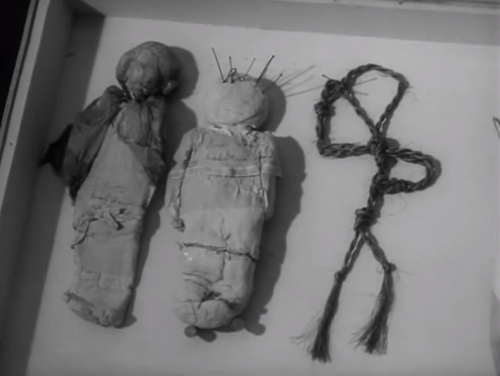
You can prepare a special Poppet incorporating some element of a specific individual target (using a clump of hair, a few drops of blood, and at least four fingernails, etc). It takes 1d6 hours to make, and lasts for 1d6 days. You can cast Magic Missiles to target this poppet, and the damage will inflict the specified target, unbidden by range restrictions (same plane only please).

5. Dagger Feature: Sympathetic Athame
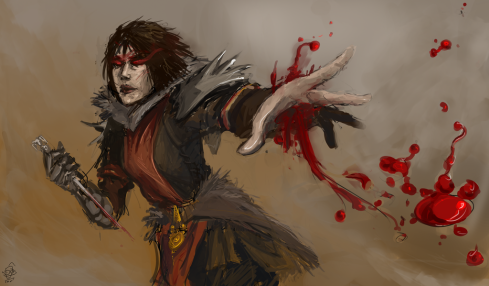
As long as you have Magic Missile prepared, you can cut yourself (inflicting standard damage) and also inflict this damage on any target you specify within visual range. If you roll maximum damage, you begin bleeding at HLSS hit point(s) per round.
Careful now...
6. Patient Missile
You can choose to cast your Magic Missiles in such a way that they do not fire immediately on casting. Instead, when cast they remain present in the current location for up to your level in turns. They will fire at any target(s) present (randomly) when this duration elapses. If no targets are present, the spell returns to your mind, inflicting 1 point of damage per missile in the process.


Spell Features: Floating Disc and Hold Portal

Floating Disc

1. Feather Fall Charm
You can cast this spell on a specially prepared charm (requires the feather of a beast with at least 4 HD, [so that's where Owlbears come from!]). The feather functions as a “Feather Fall” spell, most of the time. When utilized by others, the charms have a chance of being insufficiently powered at the most inopportune times (better have a backup, they do stack). If you are falling and have this spell prepared, this is never an issue. You gently gloat/float all the way to rest at the bottom (if there is one), or can expend this spell to have a companion's charm (within line of sight) work in this fashion as well. Otherwise, the Charms still work some of the time: treat all falls as 1d6 x 10' less. You start play with 1d6. (you know they don't work when sold, only when given away, but others don't necessarily know that).

2. Dagger Feature: Flying
While you have this spell prepared, extend the ranges of thrown daggers by 20 feet. If you expend the spell, a dagger you've thrown in the last day will return to you (it must be able to physically traverse the space). You're also great at juggling them if you concentrate (not during combat, please).

3. Language: Air Elemental
You can speak the sibilant syllables necessary to communicate with creatures of Air. They are extremely impressed with your diction (+2 to reaction rolls) and call you “brother,” “sister,” or “sibling” (determine randomly per Elemental, they aren't too good at telling mammals apart). Earth Elementals view you with suspicion (-2 to reaction rolls).

4. Gainful Portaging
If you have this spell prepared and spend 1d6 turns helping someone or yourself carefully pack their equipment, you can reduce encumbrance by 100cns (10 lbs.) or 1 significant item's worth. These convoluted methods do make the items harder to retrieve however (it takes 1d10 rounds more than normal), so be mindful of what you stow away.

5. Spell Book Feature: Buoyant
While this spell is prepared, your spell book floats on water, and can levitate about 4 feet off the ground for study. It engenders no encumbrance. It cannot support more than a pound of weight, but you can choose to have it follow you around mysteriously draped in a sheet if you are so inclined.
Tom Eckert sculpts fantastic things out of solid wood.
BOOOOOOOOOOOOOOOk.

6. Familiar Feature: Light as Feather
If you acquire a familiar, it is inscrutably “weightless,” extremely quiet, and completely uninterested in food or drink. It doesn't “float” exactly, it just doesn't exert any downward force. You can cast this spell to transfer these properties onto yourself for 1d6 turns, but when you do your familiar “weighs” as much as you. It also becomes extremely hungry and noisy.


Hold Portal

1. Tattle-Tale Lock
You can cast this spell on a specially prepared Lock (inset with a gem valued at least 50gp, and engraved with your name), and for 1d6 days the lock can speak, and remembers everyone who passed through a portal or container that the lock is affixed to (and the means or methods they used, if important). You may have as many of these locks active at a given time as your HLSS.

2. Spell Book Feature: For Your Eyes Only/Privacy Please
Your spell book can only be opened by you. Seriously. It's just a plank of wood to everyone/everything else as long as you have this spell prepared. I wonder if your spell book can be opened if you die with this spell prepared? If you expend this spell prior to preparing your spells, you may choose to have all portals/doors within 50 feet of you, sealed as the Spell (normal duration).

3. Jar of Friendly Earseekers
You have a jar of 1d4 friendly Earseekers. You need to feed them (insert them in your ear, they consume one happy or sad memory), but they can be sent into any door and will report back on what is on the other side (they tell you when you put them back in your ear and reward them with a quick snack). Sadly they only live on this lighter fare for about a year (unless you can find them more substantial cuisine, you monster, you). Earseekers leave a very distinct territorial pheromone in their friends, so you are immune to them and can harvest them from doors with impunity. This makes a lot of noise, and takes 1d6 turns of gouging and cajoling them out of their current door.
“I'm peckish. Can I have a nibble on your first kiss?”

4. Language: Mimic
You can speak the pidgin and ever-changing language of Mimics. + 2 to reaction rolls with Mimics, shift results up by one category if they are in the form of a door when encountered. If you have this spell prepared you are immune to their sticky pseudopodia.
Joan River's voice: “Can we talk?”
5. Puzzle Box
You possess the necessary skills to manufacture puzzle boxes that are extremely difficult to open (taking your level x 1d6 hours to open without magic). They are very valuable to the right collector. You can expend this spell, and if you can concentrate for 1d6 turns, you can pick one, and you know exactly where it is (on the same plane of existence, natch). They take about 1d6 weeks to make and around 50 gold pieces.


6. Familiar Feature: Passdoor – When you acquire a familiar, you can expend this spell and your familiar gains the ability to pass through a single non-magically sealed/closed door or other mundane portal for 1d6 turns. It dines luxuriously on locks and keys, and is almost too chummy with thieves. 

Spell Features: Analyze and Charm Person

See this post for explanations and more information.

Analyze

1. Avaricious Eyes
If you have this spell prepared, you can instantly enumerate large sets of the same or very similar items. Most commonly used with coins, you have but to glance at pile and you know the exact number of coins (of each varying type) in a pile of 10,000 coins or less (if it's more, you know this fact, but it will need to be split into smaller piles before you can count it). You can also carefully study a gem, piece of jewelry, an objet d'art/de vertu, or a piece of fancy furniture for 1d6 turns and ascertain it's precise value in gold pieces by expending the spell. Pick a two digit number (or roll d%) and write it prominently on your character sheet. If you ever end up “counting” or “appraising” a value that ends in these numbers, the numerological feedback loop leaves you unable to utilize this feature or prepare this spell for 1d6 days.

2. Spell Book Feature: Palimpsest of Common Command Words
Your spell book contains a list of Command Words (1d6), each word is rated with a percentage (d%), upon encountering a command word item, you may pick a word and cross it out. If you roll under the percent chance for this word, it is the command word of this item. You can expend this spell to switch the tens and ones place of your d% roll. Your diligent research into this area of dweomercraft in between adventures allows you to add a new word to the list each time you gain a level in experience.

3. Know Lineage
With a sample of blood (at least a vial's worth), you can expend this spell to learn all about the lineage/bloodlines of a target, going back a number of generations equal to your level. One of your parents is not actually related to you.

4. Dagger Feature: Haruspex
Any dagger in your hand becomes a relatively gruesome tool for effective, but bloody divination. By using it to dissect the entrails of a animal creature that has been killed in your presence while you have this spell prepared, you can consult the creature's viscera to foreshadow the future. This is a gory and ponderous process that takes 1d6 turns. Once the examination is complete, you will possess the ability to detect secret/concealed doors with the same base chances as an Elf (Autumnal Variety, 2 in 6) for the rest of the day. If you choose to share your findings with others, your rambling prophecy allows you to expend this spell immediately whenever you witness one of them taking damage. Damage is rolled twice and the lower result is used. Livestock and other animals are preternaturally nervous around you (-2 to reaction rolls) and generally disobedient and skittish in your presence.

5. Tea Leaves
You possess some rather interesting tea leaves (enough for 2d6 cups). Brewing a cup's worth takes 1 turn and boiling water. The process smells positively lovely, the tea is delicious, and drinking it even heals 1d6 + HLSS hit points (quite useful in a pinch). More intriguingly, if you add a single drop of a magic potion to the cup before drinking (the strength of the tea mitigates any potentially harmful effects, or at least that's what you Master told you), you can consult the leaves in the bottom of your cup and they will provide you with enough clues to discern the potion's purpose with certainty. You know where this tea grows (several dozen hexes of ocean away, most likely) in the event you need to harvest more by the light of a full moon.

6. Familiar Feature: The Eyes Have It If you possess a familiar, and have this spell prepared you can spend a turn concentrating in order to see through your familiar's eyes for up to 1d6 turns. This process is disorienting however, and requires a turn to recover from, during which you are nearly blind. Your familiar cannot see colors and this is sometimes frustrating.


Charm Person
1. A Loyal Henchmen
Recipient of a Charm Person that you cast and went awry. It's permanent now as long as you spend at least a few hours a day with your Henchmen (sharing a few meals and conversing/interacting). As long as you have this spell prepared, the Henchman has max Morale/Loyalty scores and get's a +2 to one Ability Score of your choice. You've grown quite fond of your Henchman over the years. The Henchman also knows your most terrible secret.

2. Spell Book Feature: Hamlin's Concerto
Folded gingerly between the leaves of your Spell Book is a dogeared page of sheet music. You suspect it is for casting a much more powerful ritual version of this spell in conjunction with a simple flute and tatterdemalion attire, but you'd be loathe to risk such puissant magics at your current novice level of expertise. Still, you can make out the basics: By playing this tune for 1d6 turns after a promise of silver, you can choose to have either rats or children be affected by the Charm Person spell for as long as you continue to play + 1d6 turns (you can communicate with them telepathically during this process to issue simple commands), and this spell affects multiple targets (at least an entire Village worth of rodents/children, if it becomes an issue d10,000 and d1,000 respectively). Save versus Spells after the first 10 minutes. Failure means you get to begin a new and exciting life as a member of the species rattus norvegicus. As a minor consolation, you are a carrier of 2d6 fleas itching to spread your bubonic plague and you can also cast Charm Fleas Or Felines twice daily.

3. Spell Book Feature: Etiquette Book – You can devote 1d6 turns to studying your spell book prior to interacting with a different social class to engender a positive shift (up one category) to reaction rolls. Works indiscriminately on anyone from common carpenters to cabbage-headed kings. Shift your weekly living expenses up a category though.

4. Perfume
You have 2d6 doses of a marvelous and magical musk. After applying a dose the recipient will smell pleasant (no matter what) for a year. If you have this spell prepared and have applied the perfume in the past week, your effective Charisma Score is 2 higher (max 18), or high enough to engender at least a +1 bonus. You can expend the spell at any time to cast Charm Person on a target that can smell you, and they save with a penalty equal to your Charisma Bonus. Also, for the purposes of Saving Throw intervals (Rules Cyclopedia, Page 144), this target is treated as having their Intelligence Score lowered by your level (minimum 3), as long as you are doused in a fresh dose when the interval arrives. You have only one of these Charms active at any given time. Should you run out of perfume, manufacture of more requires some pretty extensive reagents, and this is a constant source of study for you. Upon gaining a level, you may attempt an intelligence check. If you succeed, you may learn one of the 9 reagents necessary to make additional doses, at the cost of your automatic spell gain. If the check fails, well...

5. Language: Harpy/Dryad
You can speak the language of either Harpies, or Nymphs and Dryads (choose one). You are also immune to your choice's Charms while you have this spell prepared. While out cavorting on your adventures, you try not to think about one of the following, based on this choice:
I. Somewhere a Willow weeps in the woods, alone with a broken heart. Elsewhere a Brook blubbers between boulders, ever so patiently wearing down mountains. Both take no comfort in knowing that they aren't the only one forlornly longing for your return. As each season's snowy and icy-still torpor brings more maudlin memories, their tears begin to turn to bitter rage at the prospect of sharing you.


If the prospect of a love Triangle this perilous makes you idiomatically or ideologically 180°, there's always option II.

II. Ostracized in her aerie, a somewhat struthious Celaeno meticulously preens her plumage for you whilst singing the saddest of songs. She's tried in vain for months to get her strangely wingless clutch to fledge.
Venetian Harpy via Forest Rogers: Fantastic Beings. “You never call...”

6. Familiar Feature: Serpent
If you possess a familiar, while you have this spell prepared your familiar grants you another saving throw against Charm spells (it can't abide divided loyalties). Your tongue is forked, and your familiar may assume the shape of a crown, diadem, or other type of ornate headgear. If you choose, you may cast this spell, and whatever target you choose can be inveigled by your familiar to perform tasks that would normally be considered contrary to their alignment or habits (still no Seppuku sadly, but anything shy of this is fair game). Before excitement overtakes you though, any new spells you prepare are chosen for you by your familiar (randomized) for at least one week, plus the normal time period associated with Charm Person based on your Intelligence (lovely page 144 again). It has just Charmed you in a way, and has unfulfilled aspirations of Power with a capital “P”, a penchant for corrupting established institutions, and a very detailed long term plan (probably involving Dragons, or at least those lovely Lamias and that one megalomaniac Medusa it's friends with). By carefully guiding your spell selection, it believes it can start seeing these undoubtedly dangerous plans to fruition.


Yesssss. My diabolic plot requiresss casssstingsss of VENTRILOQUISSSSM and FLOATING DISSSSSSC!

Monday, January 12, 2015

The Elf

Rules Cyclopedia: Page 25, The Elf Class

Here's an alternative implementation of the Elf Class that shifts the focus from the traditional D&D Elf to something a little stranger and unpredictable. I've had this in my house rules for a while now, but was recently reminded of it by noisms' excellent recent posts about his Faerie Knights. Let me know what you think or how you would hack it.

Prime Requisite: Charisma
Hit Dice: d6
Armor Training: +2 (Medium Armor)

Class Abilities:

Tied To The Seasons:
Elfs are mystically tied to the seasons by a magical grove that is planted on their “birth” in the Unseen Lands from which they hail. 
It is said that when an Elf laughs, wind rustles the branches and leaves of their grove, whilst tears shed by an Elf (often when regarding a thing of beauty, or in mirth or joy) provide rain. Sadness and brooding can produce violent storms. It is night in the grove when an Elf sleeps, and day when awake.
BECMI Rules: an Elf's grove is initially equivalent to 1 hex of untamed wilderness in the Unseen Lands, with a potential to increase in size (by an adjacent hex per level) as the Elf gains experience levels.

Domain level play for Elfs typically takes place primarily in the Unseen Lands, but this is fraught with peril, as conquering a hex typically involves politically embarrassing, winning archery contests, haggling and barter, or sometimes outright slaying another, adjacent Elf as real estate is at a premium.

Level-draining attacks raze a hex worth of wilderness grove, one hex per level lost.
Notably, an Elf's physical appearance and personality will also take on vastly different aspects in relation to their current season.

These quirks may have given rise to the tendency for Humans to try to classify a particular Elf into the more familiar sub-types (High Elfs, Wood Elfs, Dark Elfs).

At the start of play, an Elf can choose or roll on the following table to determine the current season in their grove, and gains the appropriate boons and immunities.


Roll or Choose
Season
Boon
Elf Type
Immunity
1
Spring Low-Light Vision
“High Elf”
Charm Person
2
Summer Exceptional Hearing
“Wood Elf”
Sleep
3
Autumn Detect Secret Doors
“City Elf”
Protection from Evil
4
Winter Darkvision
“Dark Elf”
Ghoul Paralysis

Here all the “traditional” Elf abilities are preserved, but are not all present in a given Elf simultaneously.
Spring/High Elfs:
Elfs in the season of Spring are at their tallest (often exceeding six feet) and most beautiful to humans. They possess a difficult to quantify savoir-faire, and are said to appear noble or comport themselves with an intrinsically regal bearing that is slightly unsettling and sinister (they possess large, unblinking eyes). Lighter hair colors and eye pigmentation predominate. “High Elfs” tend to be predisposed to political intrigue, courtly behavior, and arrogance. They are the self-styled “Lords” and “Ladies” of the courts and ruling classes of the Unseen Lands, where they favor high places like mountain tops, on which they build impressive castles to exact fealty from Elfs of other Seasons.

I always think of Mucha's Seasons when it comes to these Elfs.

Summer/Wood Elfs:
Summer Elfs shrink several inches from their height in Spring, and tend to broaden and become more sinewy in shape. Their skin darkens significantly and often takes a cast of olive green or loamy brown. Hair and eyes also seem to favor darker shades with tints of the forest, which possesses a powerful draw for Elfs in this Season. Their ears enlarge significantly. Xenophobic, insular, and bellicose personality traits tend to dominate the colloquially termed “Wood Elfs.”

Yes, you guessed it. They look like these guys.

Autumn/City Elfs:
Unfettered by the Superstition that limits them in other Seasons, Elfs in the Autumnal are most at home among other races and civilization in general. Often exceptionally daring and sociable, they work extremely well with others. Hair and pigmentation lighten from their Summer forms, and can even take on a seasonal cast featuring vibrant oranges, fiery reds, and even shades of purplish brown. They are slightly taller than their previous forms and seem preternaturally predisposed to haggling, good-natured trickery, and merry-making.

Have to fit these Elfs in here somewhere. Yes, Autumn Elfs can grow beards.

Winter/Dark Elfs:
When winter arrives at an Elf's grove, their hair becomes bone white or sometimes fall out completely. They are the shortest, rarely approaching five feet tall. Their skin is often eerily pale, with the occasional bluish, almost bruise-like cast. Their fingernails grow sharp and harden into small talons, and they become virtually nocturnal due to a sensitivity to sunlight brought on by their pallor and sensitive vision (their grove is sunlit when they sleep). They are rapacious, carnivorous, and untrustworthy, with an affinity for wolves and other creatures of the night.


Something akin to this, only slightly less “Undead-y.” Slightly. Or if you prefer, go with Shadow Elves.

An Elf may voluntarily shift the season of their grove in the Unseen Lands (moving to the next season in order) at any time, but this is a painful and grotesque transformation that is gruesome to behold when done without the proper attunement ritual (this typically involves fasting for a full day and night, on a full or new moon, or a pilgrimage to their grove in the Unseen Lands).
Rules: An Elf takes 2d6 damage when changing seasons without the ritual. The process takes a number of rounds equal to the highest roll of these two dice. The process can be hastened to a single round at the cost of an additional die of damage.
Entrances to the unseen lands are found in hexes with the usual chance to find hidden/concealed doors (1 in 6). These chances increase by 1 for Wood Elfs in a Forest Hex, City Elfs in a Settlement, Dark Elfs Underground (natural caverns only, or maybe in Swamps), and High Elfs in the Mountains. Chances also increase if the prevailing season is present in the Seen Lands (A snow covered forest in winter, lends a 2 in 6 chance to locate an entrance to a “Dark Elf” for example. While a City hex in the Fall has a 3 in 6 chance of yielding an entrance to the Unseen Lands for a “City Elf”).
Elfs only age (a single year) when shifting from Winter to Spring, lending credence to the oft-held superstitions concerning their immortality. Age to an Elf is a mostly voluntary process, and this seasons their outlook on life with a bit of hedonism and contempt for the more mortal races. They will often spend decades in a given Season, associating with only others of the same. Due to the marked change in appearance, it is quite possible to meet the same Elf twice over the course of your lifetime, and not recognize them.
Rules: Elfs subjected to aging attacks are actually affected normally, but attacks of this nature will also cause the Elf to suddenly shift to the next Season, taking the associated damage. An Elf's natural lifespan is roughly equivalent to that of the human stock from which they are all derived, when they are stolen as human children/babies by a pair of Elfs wishing to breed.
Elfs of venerable age inevitably become exceptionally cautious of changing seasons and will go to extreme lengths to maintain their current forms, for it is rumored that an Elf that reaches the end of his or her lifespan forgets much of this life, becomes quite diminutive in height, broadens significantly, and wizens, becoming a Dwarf. Dwarfs are naturally bitter when confronted by these reminders of their formerly beautiful and graceful states. Elfs, are often disgusted when confronted with their mortality in physical form, which partially justifies the traditional animosity between the two races.
Rules: An Elf that reaches it's Level Limit, instead of retiring from play can choose to begin advancement as a Level 1 Dwarf with the ability to forge Fey Metal and Elf Gold. An upcoming entry on Dwarfs will expound upon this process.
Elf Gold:
Elfs begin play with 2d6 pieces of Elf Gold. These coins appear to be made of purest gold but inevitably turn into gorse blossoms, leaves, acorns, or small gingerbread cakes an hour after being spent outside of the Unseen Lands (subject to Season). The Elf's name appears on the coin in Elfish, along with their stylized profile on one face, and a significant event in the Elf's life on the other.
Elfs use this Gold as currency in the Unseen Lands, and often trade it for things considered strange/unseemly from the real world (feudal serfs from the Seen Lands, songs, sweets, baby teeth, etc). The value of these commodities tends to vary greatly by Season, but an Elf can always acquire more Elf Gold from their brethren in the Unseen Lands by trade or performing services.

Additional Languages:
Elfs possess the ability to Speak (not necessarily write) the following languages in addition to Elf and the nearest local Human dialect: one Seasonal language and the language of one animal species native to their current region and season.
Season
Language
Spring
Treant
Summer
Pixie
Autumn
Hobgoblin
Winter
Gnoll

Animal Language (Choose or Roll)
1
Avian (all manner of birds)
6
Canine (dogs, wolves, foxes)
2
Rodents (rats, beavers, rabbits, etc.)
7
Feline (lions, tigers, domestic cats)
3
Serpentine (all manner of snakes)
8
Bovine (cattle, antelope, deer)
4
Saurian (all legged reptiles)
9
Equine (horses, mules, unicorns)
5
Ursine (bears, wolverines, badgers)
10
Aquatic (bony fishes)

Vulnerabilities:

Superstition:
During all seasons save Autumn, Elfs are affected by the Cleric or Magic-User spell Protection from Evil as if they were an Enchanted Creature, regardless of the Elf's actual alignment or intentions.

Cold Iron is Poisonous:
This prevents them from utilizing man-made worked armor and weapons. Instead, Elfs use a legendary alloy colloquially called “Fey Metal” which possesses many of the same properties of high quality steel, but without harming the Elf. Fey Metal can only be forged in the Unseen Lands, by ancient Elfs or more commonly, Dwarfs of exceptional skill. Price is in Elf Gold or feudal services to an Elf Lord or Lady, whose intrigues and machinations often spill out onto the Seen Lands.
Elfs take 1 point of damage per turn of prolonged contact with worked iron and it's derivatives. Attacks with weapons do normal damage. Although this damage cannot reduce an Elf below 1 hit point, the damage cannot be conventionally healed without a week-long sabbatical to their grove in the Unseen Lands.

Sweet Tooth:
Sugar is a mild intoxicant to Elfs, much like alcohol to Humans. It can also be highly addictive.
Elfs must make a saving throw versus Poison each time they consume sugar or food/beverages containing sugar. Failure indicates that they start to suffer the effects of inebriation (a cumulative -1 penalty per item consumed). Once they have partaken, it is often difficult to refuse additional helpings (easily implemented with a Wisdom check). 

Some notes for conversion to 5e:

Although this may work better for Race as Class systems, here are some rough notes for implementation in Fifth Edition.

Tied To The Seasons:
You may determine that each season comes with some associated Ability Score bonuses/penalties, or perhaps different sets of Skill Proficiencies. I haven't thought too much about that, as it seems like it would engender too much bookkeeping or the need for four separate character sheets! Level drain razes 1 mile of their grove per point of damage.

Entrances to the Unseen Lands:
As above, but Elfs instead gain Advantage on Perception (for City Elfs) or Nature rolls to locate the entrance in favorable conditions.

Aging Attacks:
In 5e, I'd potentially allow the player to choose to age the years or shift seasons.

Superstition:
As above but for Protection from Evil and Good. Optionally, Elfs can be rebuked through Clerical Turning in all seasons but Autumn.

Cold Iron is Poisonous:
Elfs have gain the Poisoned Condition after wielding or wearing items made of worked iron or it's derivatives. To remove this condition, they must purify themselves in their grove within the Unseen Lands (a long rest in their grove should be sufficient).

Sweet Tooth:
CON check, DC 10 + 2 per serving. First failure results in the Poisoned Condition (alleviated by a long rest, short rest gives a Save). Must make a WIS check (same DC) after each serving to refrain from continuing to partake. Three successive failures result in the Elf passing out, and waking with a “hangover” and the Poisoned condition. Alternatively, just use the Exhaustion table.


Still to do: Finish up the Seasonal Elf Spell Lists for BECMI. I really like the idea of each Season coming with a corresponding Spell List, and I'll be mining the Druid Spell list, GAZ 5: The Elves of Alfheim, and GAZ: 13 The Shadow Elves for ideas.


Search

Root Ring!

Labels

random tables (324) d100 (321) tables (163) encounters (143) OSE Encounters (133) OSE (132) magic items (44) dungeons (25) magical items (21) equipment (20) monsters (20) wilderness (20) wilderness tier (19) character generation (17) dnd (17) magic (17) treasure (16) spells (15) clerics (14) rumors (14) NPCs (13) generators (13) gear (12) hexes (12) hex crawls (11) house rules (11) spell features (11) BECMI (9) ideas (9) names (9) resources (9) RC hacks and house rules (8) advancement (8) dressing (8) plants (8) settlements (8) stocking (8) characters (7) cities (7) curses (7) dnd hacks (7) events (7) magic users (7) adventure hooks (6) animals (6) clues (6) dolmenwood (6) dungeon stocking (6) treasures (6) weapons (6) what tables (6) why tables (6) backgrounds (5) classes (5) domain tier (5) fairy tales (5) potions (5) religion (5) set dressing (5) shrines (5) world building (5) yoon-suin (5) character sheets (4) current campaign (4) doors (4) dragons (4) fair folk (4) food (4) foreground growth (4) hirelings (4) hooks (4) jewelry (4) mountains (4) reviews (4) team tuesday (4) tools (4) villages (4) 4e (3) Elfs (3) PCs (3) TROIKA! (3) WHITEHACK (3) abilities (3) armor (3) cantrips (3) carousing (3) character classes (3) character death (3) clothing (3) decoration (3) dm (3) domain (3) downtime (3) dungeon dressing (3) fauna (3) foraging (3) fourth edition (3) fungi (3) goblin project (3) hex stocking (3) how tables (3) landmarks (3) locks (3) maps (3) mentzer (3) mushrooms (3) overland (3) procedures (3) puzzles (3) questions (3) quests (3) religions (3) rules cyclopedia (3) spellbooks (3) swords (3) tells (3) traits (3) transcripts (3) traps (3) vignettes (3) wave crawls (3) where tables (3) wizards (3) Cairn (2) Dwarfs (2) ability scores (2) abstract combat (2) adventure seeds (2) adventures (2) backstories (2) books (2) bows (2) buildings (2) castles (2) city crawls (2) community projects (2) consumables (2) d&d (2) death (2) deities (2) deity disfavor (2) drinks (2) experience (2) factions (2) fairy tale friday (2) fighters (2) flaws (2) flora (2) folklore (2) followers (2) forests (2) furniture (2) gods (2) gorgon trail (2) habits (2) harry clarke (2) hazard system (2) herbs (2) hex crawling (2) hex-describe (2) hobbies (2) identification (2) identifying (2) journeys (2) knacks (2) lairs (2) lore (2) magic systems (2) magic-users (2) magical research (2) meetings (2) miens (2) mishaps (2) money (2) mutations (2) ocean (2) omens (2) portals (2) projects (2) reaction rolls (2) reagents (2) retainers (2) rituals (2) rooms (2) sailing (2) saving throws (2) scrolls (2) sea (2) secret doors (2) shields (2) ships (2) single-use items (2) skills (2) smells (2) special abilities (2) spending (2) spoor (2) staffs (2) stocking tables (2) strongholds (2) superstitions (2) tex-crawl (2) thieves (2) toadstools (2) traces (2) tracks (2) wonders (2) words (2) 20 minute dungeons (1) 5e (1) DR (1) GLOG (1) KtA (1) NPC Party (1) OSR (1) Rival Adventuring Parties (1) VEINS (1) aasimar (1) absent players (1) accessories (1) activities (1) adventurers (1) alchemists (1) alcohol (1) alignment languages (1) altars (1) ammo (1) ammunition (1) angels (1) arduin (1) arrows (1) art (1) artifacts (1) axes (1) backpacks (1) bags (1) balms (1) bards (1) beans (1) belts (1) berries (1) birds (1) blessings (1) blogging (1) blogosphere (1) body art (1) bookshelves (1) boons (1) boots (1) bounties (1) bracelets (1) bracers (1) breath weapons (1) brooks (1) businesses (1) calendars (1) campaign starters (1) camping (1) candace (1) candles (1) cards (1) cartography (1) celestials (1) ceremonies (1) clergy (1) cloaks (1) clubs (1) coins (1) cold iron (1) collective nouns (1) combat (1) comic relief (1) commodities (1) common (1) commune (1) complications (1) connections (1) containers (1) corridors (1) cosmology (1) couplets (1) creeks (1) critters (1) crossbows (1) crowdsourcing (1) customs (1) d12 (1) d36 (1) d66 (1) dances (1) debts (1) deception (1) deeds (1) defenses (1) dilemmas (1) dimensions (1) discoveries (1) diseases (1) divination (1) divine (1) dogs (1) donkeys (1) downloads (1) drawbacks (1) encounter activities (1) encumbrance (1) energy drain (1) excuses (1) experimenting (1) exploration (1) fairies (1) fairy (1) familiars (1) features (1) festivals (1) fey (1) finances (1) fines (1) fish (1) fishing (1) flow charts (1) foibles (1) foodways (1) fountains (1) friendly monsters (1) fruits (1) future campaigns (1) galmours (1) game jams (1) gardens of ynn (1) garlic (1) garments (1) gary gygax (1) gauntlets (1) gems (1) geography (1) girdles (1) gloves (1) goblins (1) goo drinking (1) grimoires (1) groups (1) gullets (1) hacks (1) hallways (1) hats (1) hazards (1) healing (1) helmets (1) hex features (1) hex-crawling (1) hexagons (1) hiding (1) hints (1) history (1) holiday (1) holidays (1) horses (1) humanoids (1) hunting (1) illusions (1) in medias res (1) incense (1) ingredients (1) initiative (1) insects (1) itch.io (1) jellyfish (1) keep 'em poor (1) keys (1) lamp oil (1) lamps (1) landforms (1) languages (1) lanterns (1) laws (1) legends (1) light (1) limited-use items (1) lists (1) locations (1) lockpicks (1) maces (1) magic research (1) magic shop (1) magic words (1) magical effects (1) mapping (1) masks (1) meanwhiles (1) memes (1) mentors (1) mercenaries (1) merchants (1) miniatures (1) misfortunes (1) modern (1) monster motivations (1) motivations (1) mules (1) mysteries (1) nautical (1) new spells (1) nouns (1) obituaries (1) objects d'art (1) ocean crawls (1) oceans (1) ointments (1) overland exploration (1) overland travel (1) overloaded encounter die (1) pastimes (1) percepts (1) perchance (1) perdition (1) pets (1) pits (1) places (1) planes (1) player characters (1) poisons (1) pools (1) pouches (1) pranks (1) predicaments (1) priests (1) procedural flow charts (1) process (1) props (1) protection scrolls (1) provisions (1) purses (1) quarrels (1) raise dead (1) rations (1) reasons (1) referee aids (1) relics (1) reputation (1) restocking (1) rests (1) resurrection (1) rewards (1) rings (1) rivers (1) roads (1) robes (1) rolemaster (1) ropes (1) rules (1) ruminations (1) saints (1) salves (1) sashes (1) scenery (1) scheduling (1) sea faring (1) seafaring (1) seafood (1) secrets (1) senses (1) sentient swords (1) session starters (1) setting questions (1) settings (1) shoes (1) shopping (1) side effects (1) side-effects (1) site features (1) sites (1) so tables (1) software (1) soirées (1) song tables (1) songs (1) sounds (1) speak with animals (1) speak with dead (1) speak with plants (1) spears (1) special attacks (1) special results (1) specials (1) spell casting (1) spell substitutes (1) springs (1) statues (1) statutes (1) stomachs (1) stories (1) streams (1) streets (1) strict time keeping (1) subsystems (1) surprise (1) swanson abilities (1) swansong abilities (1) table talk (1) task resolution (1) tattoos (1) taverns (1) taxes (1) tea (1) telepathy (1) terrain (1) the middle road (1) thief (1) thieves cant (1) tieflings (1) timekeeping (1) tinkering (1) tomes (1) toys (1) tpk (1) trade goods (1) traders (1) travel (1) treasure maps (1) trees (1) trinkets (1) turn undead (1) urban crawls (1) value (1) venoms (1) vermin (1) voronoi (1) wands (1) waterskins (1) weather (1) whence tables (1) wilderness stocking (1) wildlife (1) word games (1) xp (1) ynn (1) zero hp (1)

Blog Archive