Showing posts with label spells. Show all posts

Wednesday, January 29, 2025

d100 – What Does This Healing Magic Look Like?

It is often quite interesting to think about how some of the more frequently encountered Magics in these games might actually appear or manifest in one’s mind’s eye. Although it’s often swifter to simply throw the necessary dice and update various records, I find it far more flavorful to give some of them a bit more compelling seasoning from time to time.

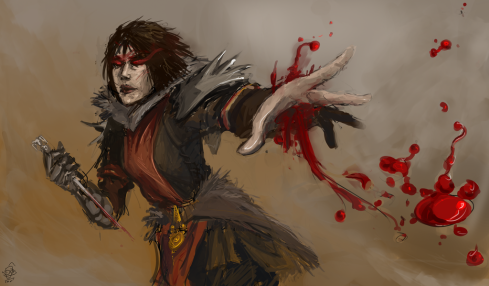
As I have done in the past with the venerable Magic Missile and the stalwart Shield Spell, this Table endeavors to explore some additional ideas for rendering those commonly seen “Curative” Magics a bit above and beyond what may be a more generic “bathed in Holy/Un-Holy light” depiction. Yes, the Hit Point damage from the Wounds of a Light or Serious nature is addressed, but what is it like to witness that magical act as an outside observer, the Healer, or the unfortunate Subject of such Spells? Since most of these seem to rely on Touch to deliver, that’s been encoded in the majority of these to a degree, and several might even serve to hint at or allude to specific Domains or Deities that could be behind the granting of such Miracles. As with all my Tables, these can be tailored to taste, but I hope at least it makes some of those medicinal ministrations a bit more interesting!

Monday, September 19, 2022

d100 - Potential Spell Recharge Conditions

Here’s a quick d100 table I put together of some potential Mausritter-style Recharge Conditions to the GLOG spells that have been lovingly rendered for Cairn here. These sorts of requirements could come into play with each casting or on doubles or triples (like conventional GLOG Mishaps/Dooms) or after three "charges" are exhasuted (how Mausritter handles them).

Tuesday, May 3, 2022

d100 - Mercurial Mentors & Weird Wizards

There is a rather lovely bit of implied world building secreted away in the Spell Acquisition process for Magic Users in B/X and OSE. Whilst I also permit transcription from Scrolls and captured Spell Books as an alternative arcane augmentation avenue, by default the only two options for expanding a Medium’s occult repertoire are Research (touched on previous posts here and here) and a mention of Mentors.

Sadly, these Thaumatological Tutors do not really receive any substantial detail, so this table aims to address this oversight. The Sorcerous Instructor can be determined alongside the Starting Spell the Magic-User begins play with, or one can simply combine results to mint new Mentors. Starting with a Name and a distinguishing Trait provides a little bit of background, may raise interesting questions, and depending on how you treat this relationship in your games might even result in an interesting NPC, Patron, Ally, or Rival through play.

If one is to rigidly interpret the Rules, I suppose each of these Spellcasters has earned the rank and title of Wizard and is at least 11th Level (the point at which Magic-Users can build Strongholds/Towers and attract 1d3 Apprentices: Another potential opportunity for NPCs if the player wasn't alone in their education and toil). I always found it amusing that unlike those earned by Thieves, these poor students are replaceable.

These individuals are responsible for imparting that single, initial Spell to their protégé, prior to the start of play. Many Referees insist on defaulting to Read Magic for this initial outlay, others roll randomly, and still others permit the player to select. My common House Rule for ages has been to grant Read Magic gratis and let them roll a d12 on the conveniently dozenal list for their second First Level spell. Should the result land on Read Magic, they may choose a Spell. It has always been my preference to make Memorization feature a choice out of the gate.

There are twelve sections of eight in this list (so I suppose one could even just roll a d12 and a d8), leaving a remainder to round out the hundred. These come with a little lagniappe should one of these fortuitous four rolls occur.

Monday, April 11, 2022

d100 - This Shield Spell Appears As...

See Also: One Hundred Magic Missiles

Oftentimes I like to encourage any Magic-Users to tailor the appearance of their dweomers a bit: Customizing them by Caster for a little individuality. I often find myself doing this for Foes to keep the other players on their toes as well. The rather generic description of the Shield Spell is one that I felt could use a little sprucing now-and-then. Invisible fields of force might still function of course, but it seems like a missed opportunity to make that Magic less monotonous and a little more Magical. 😊

Here are a hundred ideas for dressing up those defensive spells. This is solely intended to serve as a dollop of fluff and flavor of course...Unless?

Tuesday, December 22, 2020

One Hundred Magic Missiles

Magic Missile is a popular first level spell in virtually all editions, but I have always found it to grow a little monotonous over time. I often encourage my players to come up with a “signature” look and feel for their sorcerous projectiles. Just a little bit of ornamentation and embellishment over the frightfully dull “glowing arrow” default.

Since it always hits (except in that wonderfully quirky Holmes), and engenders no Saving Throw it’s a wonderful candidate for “Never Name Your Spell” in the hands of wicked Wizards and malevolent Magic Users. But how should one describe it to preserve this mystery?

Here is a d100 Table to help. A hundred entries that you can roll or choose from to give our old stand-by a bit of a makeover. These should usually be treated as strictly cosmetic of course (unless you think it would be fun not to), with the actual evocation behaving as we have grown to expect over the years. After all, 1d6+1 can be re-skinned in uncounted ways.

Friday, September 7, 2018

First Level Spell Features - Compiled

An older post of mine seems to be getting some traffic, so I went ahead and compiled my First Level Spell Features into a single PDF document.

Embedded below:


Thursday, September 10, 2015

Putting the User back in Magic-User

A post on Papers & Pencil’s entitled “Spell Lists Suck. Here are some Magic Words” got me thinking about different ways to handle magic. I’ve always been intrigued by eliminating/reducing spell lists (less to look up/remember or record).

The central conceit is that instead of learning spells from a list, Magic-Users learn “words” that are used to create new spells. I believe the old GURPS Magic had a Rune-Based system for noun/verb pairs for on-the-fly casting, and it always looked relatively tricky to judge without a ton of negotiation.

I do enjoy the idea of using the Magic-User’s initial spell outlay to determine the initial words known. The post postulates that new Spell Creation could be handled on a one-per-session basis, I’m inclined to agree, as adjudicating this kind of system on the fly may introduce inconsistent rulings. But spell creation by word combination “on-the-fly” is still somewhat interesting to me. I like the idea of making magic somewhat unpredictable and mysterious.

So, to have a starting point, I went through my trusty Rules Cyclopedia and assembled a d100 list of keywords from the Magic-User Spell Lists (levels one through nine). These are for a more “Traditional” magic, and after some careless and creative consolidation/culling, I managed to get the list down to 100 words. Some spells proved a little problematic (“Ventriloquism” was clumsily re-categorized as “Unseen Voice” for instance).

For a lark, I also created a second list using the unusual and interesting spells from the excellently strange Space Age Sorcery supplement. These entries work well to make Magic “Weirder” with the inclusion of all sorts of unusual words that really get the brain working when combined with each other or words from the Traditional List.

Now, I wouldn’t use these words exclusively (I love the idea of more mundane, “campsite magic” cantrip words, like “Teapot” mentioned in the post), but they are a good start for making some spells.

Here are the tables:


How would I use them? Well, I’d go ahead and follow the general advice outlined in the inspiring post and grant an initial outlay of two, standard, Vancian spells from the 1st Level Spell List for initial tinkering and combination. Maybe an extra word per point of Intelligence bonus to keep things interesting and encourage system-use from the start. Articles like “of” and “the” and targets like an implied “(self)” should probably be free.

Remixing these spells without formalizing a “new” spell should probably engender a check of some sort. Here are some ideas for this “on-the-fly” check:
  • Saving Throw versus Spells (good, because it takes into account Character Level)
  • Turning Check versus “perceived spell level as HD” for Spell (better because it takes into account the power of the effect and character level. Allows for a few “levels” of overcasting.)
  • Ability Score Check (non-improving, and generally too tightly-bound)
  • General Skill: Magical Engineering (consider giving this to Magic-User’s free, as inspired by the Magic-User “fixes” provided in the very excellent Building The Perfect Class document, a must-read for Rules Cyclopedia DMs that does a lot of crunching on the abilities and experience progression for the classes)
Consult your favorite Magical Mishap table for failures, or better yet: Use the Optional Rule below and do a word-swap.

Optional Rule:

Magic is a fickle and strange thing. Each time the user sleeps (after or before preparing spells), one of the words in their mind may mutate or change.
  • You could let the caster pick a word. But if this is done before or after Spell preparation this could have an impact on spell selection/casting which might eliminate some of the mystery here. I’d lean toward making the reveal after spells are prepared if this option is used. It will still probably influence play, and could rob some agency, but an argument could be made for the Magic-User intuitively knowing that something’s not right with the magical forces trapped in their mind.
  • You could randomly determine the word to be replaced and keep it secret (write it down). If you go this route, I’d recommend making the rule occur less consistently (instead of every night, it has a chance of occurring randomly, have the caster make a check).
  •  Pick a word that is not “in-use” with a prepared spell. This is the one that changed, and therefore is mainly only useful for “remixing” or “on-the-fly” casting.
Roll on one of the tables and replace the chosen word with a new one. For the first two options above, any formalized spells cast using the lost word now have the new word instead. Hilarity ensues. Formalized Spells in the caster’s spellbook aren’t affected. I’d be inclined to reveal the new word to the player when the “mutated” spell is cast so they can scurry to scribe some of the “niftier” words received in this way into their spellbook as part of a formalized spell, or remix them for the rest of the adventure.

In WHITEHACKWise Class characters receive two words per Miracle. This makes the magic system a little more formalized, but still pretty flexible. I’d eliminate any checks associated with “remixing” or “on-the-fly” casting, because of the HP Cost associated with Miracles can already serve as a limiter.

For determining the Spell Level of formalized spells, the ACKs Player’s Companion has a nice and crunchy system for Spell Creation that I recommend perusing. I particularly like how it calls out powerhouse spells like Sleep and Fireball as the result of magical innovation and breakthroughs to set them apart in power level from other spells of their level (and even higher level spells). I think it would be important to communicate up front with players that “just because it worked this way on-the-fly” doesn’t necessarily mean that the energies/effect will function the same way when they are focused into a rigid “spell.” On-the-fly casting comes with “risk” and the trade-off for reliability may dampen the power a bit.

Friday, January 30, 2015

Spell Features.

The intention is to provide a little more "Magic" to First Level Magic-Users, including up to six unusual choices for most of the standard starting spells. This should help insure that no two 1st Level Magic-Users are the same, even if they possess the same spells. It might also make the Class a little more flavorful and “exotic” for those that grouse at the limitations of low level Magic-Users or sour at the idea of Random Spell Selection when they receive perceived non-starters like the much maligned “Ventriloquism.”

I'm deeply indebted to Courtney's excellent series on Spell Memorization Effects, which I'm sure was brewing in the back of my brain when I vomited this up. It really got me thinking about Prepared Spells as a resource that does something passively until exhausted.

The idea also came to me as I was revising my Tunnels & Trolls Spell Book handouts, so please excuse the level of whimsy and tongue-in-cheek that seems to have crept into some of these. Re-skin or un-pun to taste. I think this is balanced by the ones that get quite dark in places.

I imagine that it would work something like this: Once Spells are randomly determined (or selected, if you are feeling exceptionally generous) for a first level Magic-User the player may either choose or randomly roll on the Spell Features for their specific 1st level Spell (everyone receives Read Magic in most of my games). 

Some Spell Features are obviously more useful than others, and no regard has been paid to imaginary beasts like game-balance, nor is there much in the way of mechanical consistency. This was intentional, as I find it keeps things weird and mystifying, just as magic should be.

I've tried to incorporate interesting draw backs and resource management (usually based on time, which is precious) wherever possible so that these don't just turn into more character sheet cruft. I'm interested to hear what anyone thinks.

Some definitions of terms and explanations:

HLSS: This stands for Highest Level Spell Slot. I use this periodically to provide a somewhat tighter bounded bonus than Caster Level. In BECMI, this number is never higher than nine, and it doesn't increase every level, only according to the Spell Progression table. It's also information that is fairly obvious and at-hand (most casters know the level of the highest Spell they can prepare and cast). As a controlled bonus or duration, I tend to prefer it to caster level.

BECMI Example: A 5th Level Magic-User's HLSS is 3, while a 17th Level Magic-User has an HLSS of 7.

Familiars: However you do this is fine. I typically charge the Magic-User either 30 gold pieces from their starting wealth, or if using my Quick Equipment and Encumbrance Sheet, a familiar can be had for 1 miscellaneous pick. You could also just have them pick a die to drop from their starting wealth roll (making a Familiar cost between 10 and 60 gold pieces, Magic-Users don't have expenses like Armor, so they often end up wealthier than the rest of the party, the result can also serve as the Familiar's hit points). I tend to keep Familiars mostly cosmetic, unless one of the Familiar Features associated with the Magic-User's starting spell is selected.

Expend/Release/Internalize: Some features use this terminology (I obviously haven't found a favorite yet). This is not necessarily “casting the spell” in most cases, so I don't imagine it would take any time (or need to take place on the Caster's turn even, as some of the effects are triggered in reaction to other actions), but it does erase the spell from the Caster's mind the same way. I don't imagine it really having any outward visible effects, and it'd probably be possible to do in an Anti-Magic field. Just another choice to present the player with in most cases.

I've given a little bit of thought to converting this to D&D 5e, but I'm not as intimately familiar with the new Spell List yet. In most places where Bonus or Penalty is implied, Advantage/Disadvantage could probably be used. The Slot-Point mechanics of 5e make things a little trickier when it comes to Expending, and the lack of Reaction Rolls as a central mechanic is terribly sad, but I think for the most part the more Iconic Spells (like Charm Person, Sleep, Magic Missile) are similar enough that this could be used with most versions of D&D.

I'll be splitting this into smaller groups to keep the posts short. If there's significant interest, I might assemble a PDF or create a handout/compilation.

Here's a summary of the Spell Features for quick reference/random rolling:

First Level Spells

    1. Avaricious Eyes
    2. Spell Book Feature: Palimpsest of Common Command Words
    3. Know Lineage
    4. Dagger Feature: Haruspex
    5. Tea Leaves
    6. Familiar Feature: The Eyes Have It
    1. A Loyal Henchman
    2. Spell Book Feature: Hamlin's Concerto
    3. Spell Book Feature: Etiquette Book
    4. Perfume
    5. Language: Harpy/Dryad
    6. Familiar Feature: Serpent
    1. Feather Fall Charm
    2. Dagger Feature: Flying
    3. Language: Air Elemental
    4. Gainful Portaging
    5. Spell Book Feature: Buoyant
    6. Familiar Feature: Light as Feather
    1. Tattle-Tale Lock
    2. Spell Book Feature: For Your Eyes Only/Privacy Please
    3. Jar of Friendly Earseekers
    4. Language: Mimic
    5. Puzzle Box
    6. Familiar Feature: Passdoor
    1. Selfish Spells
    2. Dagger Feature: Focus
    3. Spell Book Feature: Made In The Dark
    4. Candle Molds
    5. Language Of Shadows
    6. Familiar Feature: Bat
    1. Strix Missile
    2. Spell Book Feature: Tablet of Arrow Carving
    3. Puissant Technique
    4. Voodoo Doll/Poppet Magic
    5. Dagger Feature: Sympathetic Athame
    6. Patient Missile
    1. Circles
    2. Spell Book Feature: Warded Against Intrusion
    3. Witch Bottle
    4. Dagger Feature: Lodestone
    5. Familiar Feature: Dog
    6. Horseshoes
    1. Staff Feature: Cipherstick
    2. Dictating Quill
    3. Bonus Language
    4. Spell Book Feature: Talking Book
    5. Jar of Tongues
    6. Voracious Reader
    1. Detect Magic/Scroll Ink
    1. Heraldic Gift
    2. Shield-Bearer Training
    3. Dagger Feature: Spell-Warded Kris
    4. Elemental Ward
    5. Spell Book Feature: Defending
    6. Familiar: Turtle
    1. Spell Book Feature: Manual Of Oneiromancy
    2. Pouch Of Apple Seeds
    3. Spell Book Feature: Bedtime Stories
    4. Cockerel Automaton
    5. Osculations
    6. Familiar Feature: Sloth
    1. Music Box
    2. Dagger Feature: Voice Drinker
    3. Dummy Golem
    4. Jar Of Lips
    5. Spell Book Feature: Talking
    6. Familiar Feature: Talks

Spell Features: Sleep and Ventriloquism

See this post for explanations and more information.

Sleep

1. Spell Book Feature: Manual of Oneiromancy – Place your spell book under your pillow and cast Sleep on yourself (normal duration applies). If you sleep undisturbed for at least 1d6 hours, you can choose one of the following: Commune Spell (3 weal/woe questions), See within/behind a portal/container you've touched in the last 24 hours, or wake refreshed with no need to eat or drink for the day. Anyone sleeping within 50 feet of you when you attempt this has terrible nightmares, and cannot be woken until you wake.

2. Pouch of Apple Seeds – You have a pouch of magical apple seeds (2d6). They can be planted in fertile soil and if you cast this spell and water your handiwork, an Apple Tree will grow to sapling size in the standard Sleep Spell duration (4-16 turns). Once grown to this size, it will bear 1 ripe fruit, in a matter of seconds. Anyone eating this apple will fall asleep for 4-16 days on an unsuccessful save. The magic in the apple lasts for 1d6 days, and maintains it's potency if used as an ingredient in an apple-based dish.
Franz Jüttner (1865–1925): Illustration from Sneewittchen, Scholz' Künstler-Bilderbücher, Mainz 1905

3. Spell Book Feature: Bedtime Stories – If you spend at least 1d6 turns reading out bedtime stories scrawled in your spell book and expend this spell, anyone who is listening falls asleep and has pleasant dreams and a restful slumber (those so affected only need half as much sleep to obtain maximum benefits). It affects the double the standard Sleep Spell HD (targets as determined by the DM, randomly, and at discretion could include you, so make sure the party member on watch stuffs their ears with wax or cotton). The audience doesn't necessarily have to be “willing,” just listening to your stories. If any of the sleepers are wounded or hurt before they fall asleep, the sleeper with the highest hit points loses 1d6 x your HLSS in Hit Points, which in turn heal the hurt sleeper by twice this amount. Anyone reduced to 0 in this fashion never wakes up. They don't die, they just never wake up.

4. Cockerel Automaton – You possess a life-size mechanical rooster. It's gears can be adjusted and wound to have it crow loudly (which triggers a wandering monster check) in metallic tones at a specified time, waking anyone asleep within 500 feet. It only eats your dreams (you won't remember them in the morning if its set to crow, but who needs dreams right?). If you expend this spell, it can be wound to animate, after which it is mobile (clinking as it pointedly pecks at detritus and inquisitively following the person with the most visible metal around), and can attack as a creature with HD equal to your HLSS when cornered (this type of winding animates the rooster for the standard Sleep duration in turns, and can be combined with the Alarm feature above).
Image courteous of lollollol2 DeviantArt page here.

5. Osculations – As long as you have this spell prepared, your kiss can wake anyone sleeping and they are generally well disposed to this intrusion (+2 to reaction rolls, my prince). You can also kiss someone asleep (expending the spell) and they will slumber restfully (regaining 1d6 hit points, plus your HLSS) for the max duration of the spell (16 turns, must sleep all 16 to gain the benefit).

6. Familiar Feature: Sloth – Your familiar is generally asleep most of the time, but it does rouse whenever you sleep to lovingly rid your body of parasites and groom you, cleaning and freshening your appearance. You always wake up with nary a hair out of place (+2 to reaction rolls in situations where an impeccable appearance might benefit you). It will also defend a sleeping master as if it were 1 HD greater than normal (step up damage dice too), but it does so as silently as possible (it would hate to wake you and interrupt your beauty sleep).


Ventriloquism

This spell is generally considered a big ol' rip off, so hopefully these at least make it interesting :)

1. Music Box – You possess an intricately crafted music box with a switch that can be set in the presence of any music. It will then be able to reproduce the tune faithfully with it's limited palette of tiny mallets and electrum striking surfaces. It can hold up to your HLSS in songs. It can record such interesting songs as that of the Harpy Croon or Siren Serenade, so be careful with this.

2. Dagger Feature: Voice Drinker – If you wound someone with this dagger, and have this spell prepared, you may mimic their voice exactly. It only holds the voice of whoever was last wounded, but you may have possess as many daggers with this feature as your HLSS. You may also use this voice without issue when you cast this spell.

3. Dummy Golem – You possess a partially animated (mouth and eyebrows mostly) figure. It possess a reedy version of your voice as long as you have this spell prepared, and often makes quips and off-color comments. With concentration you can control what it says (easily earning a free meal or place to sleep for the night). You can expend this spell to have it fight as a creature with HD equal to you HLSS (quipping the entire time). If destroyed, it can be replaced with a careful carving process that takes 1d6 weeks.


4. Jar of Lips – It's a jar of 1d6 pairs of lips that can be affixed to any surface and by expending this spell, the lips will function as a Magic Mouth (using your voice). The magic will only power them for 1d6 days, and yes, you know the gruesome technique to harvest more (takes 1d6 turns of careful cutting and expending this spell). While you have this spell prepared, you are aware of any active Magic Mouths and what they are going to say before they say it.

5. Spell Book Feature: Talking – You may expend this spell prior to preparing your spells. As you prepare, your Spell Book whispers encouraging words and unconventional mystical shortcuts (in your voice). You may pick up to your HLSS in number of spells prepared during this process. These spells may be cast in complete silence, without requiring any verbal components, or alternatively, one spell you prepare may be cast with it's range or duration doubled.

6. Familiar Feature: Talks – Any familiar you acquire possess the ability to speak aloud in any language you know as long as you have this spell prepared. It is exceptionally critical of any traveling companions, and a surprisingly decent mimic of their voices. You may expend the spell at any time to telepathically convey a mental message to anyone your familiar has mocked in the last month (provided they share the same plane as you). The message is limited to a number of words equal to your level.

Spell Features: Read Magic and Shield


See this post for explanations and more information.

Read Magic

Everyone should start with this Spell in BECMI, and it should be useful in some way. I tend to fold it into to Detect Magic. 

So as a Spell Feature: While this spell is prepared, you may spend 1 turn to Detect Magic. Simple, and it makes the spell perform a bit of a double duty, enhancing it's appeal somewhat. 

Also every Magic-User may choose to start with 1d6 vials of Scroll Ink. This ink cuts the cost of scribing a scroll in half, or it may be drunk by the very desperate.

 If you dare drink, save versus poison or die in 1d6 hours, castings of Neutralize Poison will only stave off death by an 1d6 additional hours and do not offer additional saving throws, additional quaffs of ink require another save, but will also reset the duration to another throw of 1d6 hours. Only a Wish or similar high order magics can prevent death in this fashion.

Upon consuming Scroll Ink, you may re-prepare all your spells in 1d6 turns without the need for rest. Spells prepared this way leave your spell book and must be re-transcribed before they can be prepared again. The drawbacks and benefits of Scroll Ink usually only apply to the user who created the ink, although you are welcome to try and poison other Magic-Users with your ink. You are assumed to be casually collecting and briefly brewing the necessary reagents for HLSS vial(s) of Scroll Ink per level, but coming across a hogshead of Kraken Blue, a few gills of Gorgon Green, or a dram of Dragon's Blood during one's adventuring might stimulate this manufacture.

Shield

1. Heraldic Gift – You have a knack or extensive learning concerning Heraldry. You can easily identify major noble houses and lineages (+1 reaction when dealing with those that are into this sort of thing), you can also design your own device by spending 1d6 hours of meticulous artistry. Any creature/monster featured in your personal device receives a penalty to save against your spells (-2 or Disadvantage). You may only redesign your device after slaying one of these creatures, at which time you may incorporate a “new one.” It seems only natural that your new heraldic device should feature an image of a dead “old one” prominently. Mortant? Mourant?
Who knew? There's a picture of a dead Owlbear! (from here)

2. Shield-Bearer Training – You can expend a casting of this Spell and spend 1d6 turns coaching another on efficient shield use and tactics. The armor class “bonus” provided by the shield is doubled for their next combat encounter. You may also choose one of the following:
Their shield provides a saving throw versus Magic Missile (good for HLSS missiles).
This casting temporarily creates a physical Shield+1 that lasts for the normal spell Duration.

3. Dagger Feature: Spell-warded Kris – As long as you have this spell prepared, you may choose a specific spell of a level equal to or less than your HLSS. You are immune to the first casting of this spell that you are targeted with. You cannot cast the specified spell while this feature is active.


From an interesting etymological debate here

4. Elemental Ward – You know of a secret technique for channeling this spell into small temporary talismans. Given 1d6 hours, 25 gold in materials, and a casting of this spell, you can construct a tiny charm that will protect a bearer against a specific elemental type of damage (preventing your HLSS x 5 in damage for a single attack, or granting Advantage on saves). The magic that powers these talismans is expended when used to protect against the first attack of the elemental type, otherwise it lasts for 1d6 weeks before dissipating. Fire Wards will warm gloves in winter, an Ice Talisman will quickly chill a pint of ale, etc.

5. Spell Book Feature: Defending As long as you have this spell prepared and your Spell Book out and open, facing a casting foe, a successful saving throw versus a spell captures the spell in your spell book. You must have free pages (spells typically take 1 page per level in my games). You may only capture spells with levels up to your HLSS. The spell may be cast back at the caster as a riposte on your subsequent actions, otherwise it fades in 1d6 rounds (woefully inadequate time for transcribing it). You may also expend this spell immediately after being targeted by a spell to capture a spell permanently (no save required) in your book, but a randomly determined spell of the same level leaves your book and enters the mind of your opponent.

6. Familiar: Turtle – Any familiar you acquire is exceptionally hard to hit or damage (AC = at least chain, or 2 better if naturally lower). Selfless to a fault, your familiar can be sacrificed (as in Shields May Be Splintered), but the process kills the familiar and is detrimental to your health. The gnawing sense of loss reduces your base speed by 10' feet for 1d6 weeks, after which you can acquire a new familiar and eliminate this movement penalty.


Spell Features: Protection From Evil/Good and Read Languages


See this post for explanations and more information.

Protection From Good/Evil

1. Circles
If you spend 1d6 turns creating a Magic Circle and expend this spell on completion, the spell effect is centered within the circle, but lasts for hours instead of turns. If the circle is physically broken (this cannot be done by targets of the spell, but could happen accidentally...), the spell ends.

2. Spell Book Feature: Warded Against Intrusion
Your name is inscribed somewhat gaudily on the cover of your spell book in ornate leaf. You can inscribe more, but for now it's just you. Anyone opening your spell book, (who's name is not featured on the cover, of course) takes 1d8 damage per HLSS. If you have this spell prepared, you know who tried to open it and where they are, and you can expend this spell to dye their hands a bright color of your choice for a year and a day.

3. Witch Bottle
You can spend 1d6 days crafting a magic bottle. It must contain at least a single strand of hair, exactly a single fingernail, and no more than three drops of blood from a specific Magic-User. Any spells cast by this magic user against you receive a +3 to Saving Throws (or Advantage in 5e). You may have only one bottle at a time. At your option, you can also smash the bottle, expend this spell, and choose to become invisible to the subject for 1d6 turns.

4. Dagger Feature: Lodestone
While you have this spell prepared, you can place your dagger on a flat surface. In 1 turn it will point to the direction of the nearest and strongest concentration of Evil or Good (this is randomly determined, you cannot specify which). If you expend this spell while attacking with your dagger, and the target is Good or Evil, your dagger inflicts double damage for this attack.

5. Familiar: Dog
Any familiar you acquire is fiercely loyal to your ethical outlook. Step up it's damage die against any foe that doesn't share your alignment, and it fights as a HLSS HD creature. It understands your Alignment Language, and as long as you have this spell prepared it can speak it. It likes to have its belly scratched and being told its a “Good” familiar (whatever that means).

6. Horseshoes
You can take a horseshoe from a horse slain by either an Evil or Good creature. It can be hung on the threshold of a dwelling and incorporated into a ritual that takes 1d6 hours. As long as you have this spell prepared, the dwelling is protected from Good/Evil (based on who killed the horse) as the Spell. If you cease living, or cast or replace the spell with another, you'll need to start the ritual over (good thing horses have four shoes). I wonder what how it works with a shoe from a Unicorn...


Read Languages

1. Staff Feature: Cipherstick – Your Staff functions as a skytale, and you can carve corresponding sticks for decipherment. Once enciphered, any text is utterly immune to translation via Read Languages or other magic short of Wish (only your staff, or sticks you've carved can decode it), if you cast this spell while transcribing it.

2. Dictating Quill – As long as you have this spell prepared and a special writing quill from the feather of a creature of at least 4 HD (let's drive these Owlbears to extinction!), the quill will dictate whatever you wish if provided ink and suitable surface. It is fond of including snippets of your subconscious as commentary in the marginalia. If Scroll Ink (see Read Magic) is used, it might transcribe a spell, but it's helpful footnotes, occasional lacunae, and penchant for obscene acrostics make the resulting spell mighty unpredictable when cast (you must still pay for the cost of the scroll, minus the Scroll Ink discount, but the results when read are Wild Magic). The quills retain their potency for 1d6 months. You can have as many active as your HLSS (they can work simultaneously), and you can make a new one with a fresh feather and a casting of this spell. You start with 1 quill named Nicodemus, from your master's sarcastic dire raven.

3. Bonus Language – When you prepare this spell, you may pick a language you have heard spoken and seen written. You may read and write this spell fluently for as long as you have this spell prepared. You may speak the language (exclusively, no others) for 1d6 turns if you expend the spell.

4. Spell Book Feature: Talking Book – The inner covers of your Spell Book function as a Ouija Board/Spirit Board, including an ornate planchette attached with a silver chain. Cast this spell, and up to six literate individuals can use the planchette to communicate via the written word at the same time (starting with a prompt from you), and the transcribed results can be read exclusively by you and all the participants for a year and a day. You might make a lot of money with this sealing secret contracts at cosmopolitan/polyglot ports.
Initially found on Propnomicon, apparently from this kickstarter. I wonder if they consulted the board?

5. Jar of Tongues – You have a jar containing the tongue of an individual that speaks 1d4 different languages (at least one is a language you do not possess). Through a disgusting and painful process that takes 1d6 turns, 1d6 damage, and casting this Spell, you can replace your tongue with the one in the jar (your tongue is safe as long as it remains in the jar). You now speak only these languages, although you can always understand your native tongue. You may have as many tongues in the jar as your HLSS, and the grisly process of harvesting a new one takes 1d6 turns of careful cutting, alongside the expending of this spell. The tongue need not be “fresh,” but harvesting the tongue of a live creature does inflict 1d6 damage. Any tongues acquired in this fashion speak the languages their owners knew.


6. Voracious Reader – You can read the written word uncannily fast when you have this spell prepared. Fully comprehending up to 100 pages in 1d10 rounds. For larger tomes, round the total pages to the nearest die, and it will take that many turns (400 pages = 1d4 turns, 840 pages 1d8 turns, etc). If you absolutely must confirm if the butler did indeed do it, you may expend the spell to convert rounds to seconds and turns to rounds. Attempting this on magical texts is a very bad idea. 

Spell Features: Light/Darkness and Magic Missile

See this post for explanations and more information.

Light/Darkness

1. Selfish Spells
You can prepare a special version of Light/Darkness that only effects you. Quirkily, you are colorblind when you have this version prepared.

2. Dagger Feature: Focus
While you have this spell prepared your daggers can physically cut through magical darkness (they can harm Shadows, and you may slice Darkness spells to ribbons in 1d6 turns), critical hits inflicted with your dagger will take out an eye if you expend and internalize the spell immediately. (This works on any eye. Even one belonging to a Beholder, go ahead. Pick one. Only Ten More To Go!)

There is a dearth of images of anophthalmiac beholders on the internet, but I did find this one for you here.


3. Spell Book Feature: Made in the Dark
To you, all books are Perfectly Legible in the Pitchiest of Darks, including your Spell Volume, which also happens to courteously maintain a Shadow Copy of itself, in the event it is ever damaged. Retrieving it from the Plane of Shadow is the only obstacle.
Hilarious.
4. Candle Molds
You possess a set of candle molds that allow the creation of special candles. Light given off by these candles is only visible on the Darkvision spectrum, or alternatively they give off darkness instead of light. It takes 1d6 hours to make each candle. The wax needed usually comes from Giant Honeybees that make their hives in the Underworld, and the wicks are woven from the noose of a hanged thief (1 noose makes 1d6). You start with 1d6 of these candles.

5. Language of Shadows
You can speak to Shadows (specifically the Monster kind). However, Shadows can speak to every type of normal shadow (which everyone knows, are horrible gossips that can never lie and see almost everything). Sadly Shadows are not particularly well disposed to you when addressed (-2 to reaction rolls). As a consolation, you can expend this spell immediately after taking damage from a Shadow to negate the Strength Drain from that specific attack.


Excuse us, this is a private conversation.

6. Familiar Feature: Bat
Your familiar can see equally well in darkness and light, including the ability to see colors and read. You can expend this spell and gain this ability for the standard Light duration (6 turns + 1 per caster level). While you posses this ability your eyes glow and your other senses cease functioning. Oh, and your familiar is completely blind and frightened.

Magic Missile

1. Strix Missile
You have knowledge of a variant casting process for the venerable Magic Missile Spell. Your missile can instead be cast and possess a duration equal to 1 turn per HLSS. It hovers near you at all times. When it is sent to attack, it deals 1d6-1 damage, but it returns and can attack again as long as the damage inflicted does not exceed your level.

2. Spell Book Feature: Tablet of Arrow Carving
The inside back cover of your spell book contains an ancient cuneiformic formula and technique to impart magical carvings on nomral and magical arrows, producing very special arrows indeed. Making this modification requires you to etch the name of a target in the arrow itself and either a bit of hair, vial of blood or at least five fingernails of the target. These arrows, when fired at their specified target, automatically hit (à la Magic Missile). The process itself also requires 1d6 hours, expending this spell, and a successful saving throw versus Death (on failure, the arrow is ruined and the next arrow fired at you is Invisible to your senses, and has Your Name On It).

3. Puissant Technique
You learned a different method for casting Magic Missiles. You may choose to produce Missiles that are stronger (1d8+1), but require a “to-Hit” roll (see Holmes D&D). You can use the number associated with your HLSS as an additional bonus on this attack (above and beyond standard Ranged Bonuses). Your name is tattooed on any creature slain by one of these missiles.

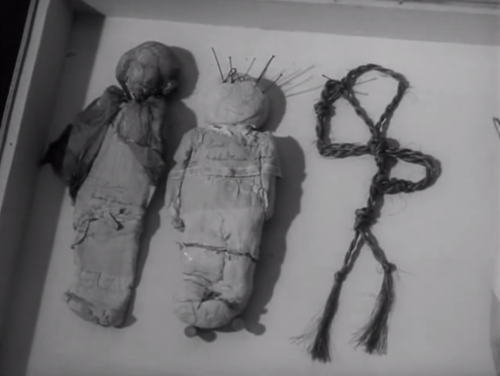
4. Voodoo Doll/Poppet Magic
You can prepare a special Poppet incorporating some element of a specific individual target (using a clump of hair, a few drops of blood, and at least four fingernails, etc). It takes 1d6 hours to make, and lasts for 1d6 days. You can cast Magic Missiles to target this poppet, and the damage will inflict the specified target, unbidden by range restrictions (same plane only please).

5. Dagger Feature: Sympathetic Athame
As long as you have Magic Missile prepared, you can cut yourself (inflicting standard damage) and also inflict this damage on any target you specify within visual range. If you roll maximum damage, you begin bleeding at HLSS hit point(s) per round.
Careful now...
6. Patient Missile
You can choose to cast your Magic Missiles in such a way that they do not fire immediately on casting. Instead, when cast they remain present in the current location for up to your level in turns. They will fire at any target(s) present (randomly) when this duration elapses. If no targets are present, the spell returns to your mind, inflicting 1 point of damage per missile in the process.


Search

Root Ring!

Labels

random tables (317) d100 (314) tables (163) encounters (142) OSE Encounters (133) OSE (132) magic items (44) dungeons (25) equipment (20) magical items (20) monsters (20) wilderness (19) wilderness tier (19) character generation (17) dnd (17) magic (16) treasure (16) spells (15) clerics (14) rumors (14) NPCs (13) gear (12) generators (12) hexes (12) hex crawls (11) house rules (11) spell features (11) BECMI (9) ideas (9) names (9) RC hacks and house rules (8) advancement (8) dressing (8) plants (8) resources (8) characters (7) curses (7) dnd hacks (7) events (7) magic users (7) settlements (7) stocking (7) adventure hooks (6) animals (6) cities (6) clues (6) dolmenwood (6) dungeon stocking (6) treasures (6) weapons (6) why tables (6) backgrounds (5) classes (5) domain tier (5) fairy tales (5) potions (5) religion (5) set dressing (5) shrines (5) what tables (5) world building (5) yoon-suin (5) character sheets (4) current campaign (4) doors (4) dragons (4) fair folk (4) food (4) foreground growth (4) hirelings (4) hooks (4) jewelry (4) mountains (4) reviews (4) team tuesday (4) tools (4) villages (4) 4e (3) Elfs (3) PCs (3) TROIKA! (3) WHITEHACK (3) abilities (3) armor (3) cantrips (3) carousing (3) character classes (3) clothing (3) decoration (3) dm (3) domain (3) downtime (3) dungeon dressing (3) foraging (3) fourth edition (3) fungi (3) goblin project (3) how tables (3) landmarks (3) locks (3) maps (3) mentzer (3) mushrooms (3) overland (3) procedures (3) puzzles (3) questions (3) quests (3) religions (3) rules cyclopedia (3) spellbooks (3) swords (3) tells (3) traits (3) transcripts (3) traps (3) vignettes (3) where tables (3) wizards (3) Cairn (2) Dwarfs (2) ability scores (2) abstract combat (2) adventures (2) backstories (2) books (2) bows (2) buildings (2) castles (2) character death (2) city crawls (2) community projects (2) consumables (2) d&d (2) death (2) deities (2) deity disfavor (2) drinks (2) experience (2) factions (2) fairy tale friday (2) fauna (2) fighters (2) flaws (2) flora (2) folklore (2) followers (2) forests (2) furniture (2) gods (2) gorgon trail (2) habits (2) harry clarke (2) hazard system (2) herbs (2) hex crawling (2) hex stocking (2) hex-describe (2) hobbies (2) identification (2) identifying (2) journeys (2) knacks (2) lairs (2) lore (2) magic systems (2) magic-users (2) magical research (2) meetings (2) miens (2) money (2) omens (2) portals (2) projects (2) reaction rolls (2) reagents (2) retainers (2) rituals (2) rooms (2) sailing (2) saving throws (2) scrolls (2) sea (2) secret doors (2) shields (2) ships (2) single-use items (2) skills (2) smells (2) special abilities (2) spoor (2) staffs (2) stocking tables (2) strongholds (2) superstitions (2) tex-crawl (2) thieves (2) toadstools (2) traces (2) tracks (2) wave crawls (2) wonders (2) words (2) 20 minute dungeons (1) 5e (1) DR (1) GLOG (1) KtA (1) NPC Party (1) OSR (1) Rival Adventuring Parties (1) VEINS (1) aasimar (1) absent players (1) accessories (1) activities (1) adventure seeds (1) adventurers (1) alcohol (1) alignment languages (1) altars (1) ammo (1) ammunition (1) angels (1) arduin (1) arrows (1) art (1) artifacts (1) axes (1) backpacks (1) bags (1) balms (1) bards (1) beans (1) belts (1) berries (1) birds (1) blessings (1) blogging (1) blogosphere (1) body art (1) bookshelves (1) boons (1) boots (1) bounties (1) bracelets (1) bracers (1) breath weapons (1) brooks (1) businesses (1) calendars (1) campaign starters (1) camping (1) candace (1) candles (1) cards (1) cartography (1) celestials (1) ceremonies (1) clergy (1) cloaks (1) clubs (1) coins (1) cold iron (1) collective nouns (1) combat (1) commodities (1) common (1) commune (1) complications (1) connections (1) containers (1) corridors (1) cosmology (1) couplets (1) creeks (1) critters (1) crossbows (1) crowdsourcing (1) customs (1) d12 (1) d36 (1) d66 (1) dances (1) debts (1) deception (1) deeds (1) defenses (1) dilemmas (1) dimensions (1) discoveries (1) diseases (1) divination (1) divine (1) dogs (1) donkeys (1) downloads (1) drawbacks (1) encounter activities (1) encumbrance (1) energy drain (1) excuses (1) exploration (1) fairies (1) fairy (1) familiars (1) features (1) festivals (1) fey (1) finances (1) fish (1) fishing (1) flow charts (1) foibles (1) foodways (1) fountains (1) friendly monsters (1) fruits (1) future campaigns (1) galmours (1) game jams (1) gardens of ynn (1) garlic (1) garments (1) gary gygax (1) gauntlets (1) gems (1) geography (1) girdles (1) gloves (1) grimoires (1) groups (1) gullets (1) hacks (1) hallways (1) hats (1) hazards (1) healing (1) helmets (1) hex features (1) hex-crawling (1) hexagons (1) hiding (1) hints (1) history (1) holiday (1) holidays (1) horses (1) humanoids (1) hunting (1) illusions (1) in medias res (1) incense (1) ingredients (1) initiative (1) insects (1) itch.io (1) keep 'em poor (1) keys (1) lamp oil (1) lamps (1) landforms (1) languages (1) lanterns (1) legends (1) light (1) limited-use items (1) lists (1) locations (1) lockpicks (1) maces (1) magic research (1) magic words (1) mapping (1) masks (1) meanwhiles (1) memes (1) mentors (1) mercenaries (1) merchants (1) miniatures (1) misfortunes (1) mishaps (1) modern (1) monster motivations (1) motivations (1) mules (1) mutations (1) mysteries (1) nautical (1) new spells (1) nouns (1) obituaries (1) objects d'art (1) ocean (1) oceans (1) ointments (1) overland exploration (1) overland travel (1) overloaded encounter die (1) pastimes (1) percepts (1) perchance (1) perdition (1) pets (1) pits (1) places (1) planes (1) player characters (1) poisons (1) pools (1) pouches (1) pranks (1) predicaments (1) priests (1) procedural flow charts (1) process (1) props (1) protection scrolls (1) provisions (1) purses (1) quarrels (1) raise dead (1) rations (1) reasons (1) referee aids (1) relics (1) reputation (1) restocking (1) rests (1) resurrection (1) rewards (1) rings (1) rivers (1) roads (1) robes (1) rolemaster (1) ropes (1) rules (1) ruminations (1) saints (1) salves (1) sashes (1) scenery (1) scheduling (1) sea faring (1) seafaring (1) seafood (1) secrets (1) senses (1) sentient swords (1) session starters (1) setting questions (1) settings (1) shoes (1) shopping (1) side effects (1) side-effects (1) site features (1) sites (1) so tables (1) software (1) soirées (1) song tables (1) songs (1) sounds (1) speak with animals (1) speak with dead (1) speak with plants (1) spears (1) special attacks (1) special results (1) specials (1) spell casting (1) springs (1) statues (1) stomachs (1) stories (1) streams (1) streets (1) strict time keeping (1) subsystems (1) surprise (1) swanson abilities (1) swansong abilities (1) table talk (1) task resolution (1) tattoos (1) taverns (1) tea (1) telepathy (1) terrain (1) the middle road (1) thief (1) thieves cant (1) tieflings (1) timekeeping (1) tinkering (1) tomes (1) toys (1) trade goods (1) traders (1) travel (1) treasure maps (1) trees (1) trinkets (1) turn undead (1) urban crawls (1) value (1) venoms (1) vermin (1) voronoi (1) wands (1) waterskins (1) weather (1) whence tables (1) wildlife (1) word games (1) xp (1) ynn (1)

Blog Archive